
Redefining Personal Health and Wellness in the Modern Era
In July 2026, we understand that personal health and wellness extends far beyond merely the absence of illness. It represents an active, deliberate pursuit of optimal well-being across every facet of an individual’s life. This shift in perspective moves us from a reactive model of treating sickness to a proactive one focused on fostering vitality and resilience. Our goal is not just a longer lifespan, but an enhanced “healthspan”—the number of years lived in good health, free from chronic disease and disability.
This modern definition embraces a holistic view, recognizing that our physical state is intricately linked to our mental, emotional, social, and spiritual well-being. It’s about cultivating a thriving existence, where every system in our body and mind functions optimally, allowing us to engage fully with life. For many, this journey begins with a commitment to Personalized health optimization, tailoring approaches to individual needs and goals rather than adhering to one-size-fits-all solutions.
Assessing Your Personal Health and Wellness Journey
Embarking on a wellness journey requires a clear understanding of our starting point. Self-assessment is a crucial first step, providing the baseline metrics against which we can measure progress. Tools like the “Personal Health Inventory,” often utilized in comprehensive wellness programs, guide us through a structured reflection on various self-care areas. This inventory helps us identify what truly matters in our lives and what we want our health for, rather than focusing solely on what might be “the matter” with us.
Another valuable framework is the “Circle of Health,” which visually represents eight interconnected self-care areas: moving the body, recharge, food and drink, personal development, family/friends/co-workers, spirit and soul, surroundings, and power of the mind. By rating our current state and desired levels in each area, we gain a comprehensive overview of our wellness landscape. This process fosters “mindful awareness,” enabling us to recognize our unique priorities and potential areas for growth. Establishing these baseline metrics, whether through self-reflection or objective data, empowers us to set realistic and impactful wellness goals.
Leveraging Technology for Personal Health and Wellness
The digital revolution has profoundly impacted how we approach personal health and wellness. In 2026, technology acts as a powerful enabler, transforming abstract goals into actionable steps. “AI health companions” are at the forefront of this transformation, moving beyond simple data visualization to provide hyper-personalized insights and daily recommendations. These intelligent systems connect with our wearable data and other health apps, interpreting complex information to offer guidance on everything from sleep patterns and nutrition to stress management and movement.
“Wearable data” and “biometric tracking” devices, such as smartwatches and fitness trackers, continuously monitor our activity levels, heart rate variability, sleep quality, and more. This objective data provides a clearer picture of our physiological responses and behavioral patterns. When combined with “predictive analytics,” these tools can even anticipate potential health issues, allowing for proactive interventions. The ultimate goal is the creation of truly “personalized health plans” that adapt in real-time to our changing needs, preferences, and progress. Platforms that integrate health plan administration, holistic well-being, and care navigation into a single, seamless experience exemplify this technological leap, helping individuals engage more effectively with their health journey.
The Multidimensional Framework of Holistic Well-Being
Our well-being is not a singular state but a complex tapestry woven from several interconnected dimensions. A holistic approach recognizes that optimal health is achieved when we nurture all these aspects, understanding that strength or weakness in one area inevitably impacts the others. The main dimensions of wellness typically include:
- Physical Wellness: Maintaining a healthy body through nutrition, physical activity, sleep, and healthy habits.
- Emotional Wellness: Understanding and managing our feelings, developing self-confidence, coping with challenges, and building trust.
- Social Wellness: Cultivating meaningful relationships, navigating social situations, and appreciating diversity.
- Spiritual Wellness: Seeking purpose and meaning in life, developing a personal belief system, and appreciating different perspectives.
- Intellectual Wellness: Engaging in critical thinking, fostering curiosity, embracing creativity, and being open to new experiences.

These dimensions are not isolated; they are deeply intertwined. For instance, chronic stress (emotional imbalance) can manifest as physical ailments, while strong social connections can bolster mental resilience and even improve physical health outcomes. Our intellectual engagement can provide a sense of purpose (spiritual), and adequate physical activity can significantly enhance mood (emotional). True well-being emerges from the harmonious balance and continuous cultivation of each of these vital areas.
Nurturing the Body and Mind
Practical steps to support our physical and emotional dimensions are fundamental to overall wellness. Our daily choices in “nutrition” play a pivotal role, emphasizing nourishing foods that fuel our bodies and minds. Coupled with this, “sleep hygiene”—consistent, quality rest—is non-negotiable for recovery, cognitive function, and emotional regulation. Regular “physical activity,” from structured workouts to simply moving our bodies with energy and flexibility, strengthens our physical form and releases endorphins that uplift our mood.
Beyond the physical, cultivating “mindfulness” and employing effective “stress reduction” techniques are essential for mental and emotional well-being. Practices such as meditation, deep breathing, and journaling help us manage daily pressures, adapt to change, and foster a greater sense of calm. These habits empower us to be fully present, cope with emotional challenges, and make conscious health decisions that benefit both our body and mind.

Addressing Often-Overlooked Aspects of Physical Health
While broad categories like nutrition and exercise are widely discussed, certain aspects of physical health often go unnoticed until issues arise. “Scalp health,” for example, is an integral component of our overall physical well-being and self-perception, yet it’s frequently overlooked in broader wellness discussions. Research indicates that a significant portion of the population, between 40-50%, struggles with issues arising from a “sensitive scalp,” including itching, dryness, and irritation.
An unhealthy scalp environment can lead to a host of problems, including compromised “follicle nourishment” and, ultimately, thinning hair. Factors such as product buildup, dandruff, or even underlying medical conditions can disrupt the hair growth cycle. Addressing these concerns proactively is crucial not only for aesthetic reasons but also for preventing further complications. Consistent, targeted scalp care, focusing on cleansing, moisturizing, and stimulating the follicles, is vital. For those experiencing thinning hair, exploring solutions that nourish the scalp and support healthy hair growth, such as a GKL-02 hair loss solution, can be a valuable step in their wellness journey.
Scalp Care Habit Hair Thickness Benefit Frequency/Method Thorough Rinsing Prevents product buildup that can clog follicles and irritate scalp. Daily, ensure all shampoo/conditioner is removed. Gentle Cleansing Maintains scalp’s natural barrier, reduces inflammation. 2-3 times per week, using sulfate-free shampoos. Scalp Massage Improves blood circulation to hair follicles, promotes nutrient delivery. Daily for 5-10 minutes, using fingertips or a scalp massager. Targeted Treatments Addresses specific issues like dryness, oiliness, or inflammation. As needed, using serums, oils, or medicated products. Nutritional Support Provides essential vitamins and minerals for strong hair growth. Daily, through balanced diet or supplements (e.g., Viviscal). Stress Management Reduces stress-related hair shedding (telogen effluvium). Daily, through mindfulness, exercise, or relaxation techniques. 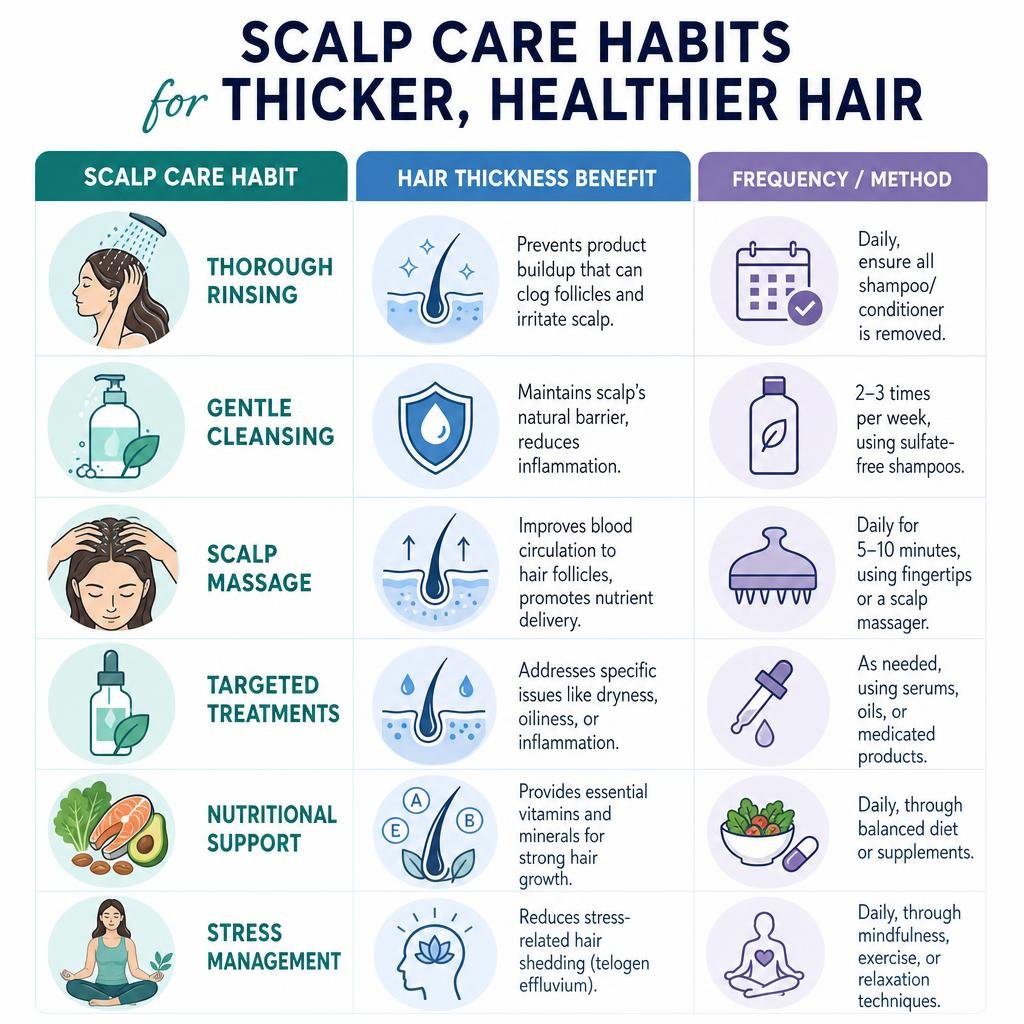
Overcoming Barriers and Adapting Your Wellness Plan
Even with the best intentions, building and maintaining sustainable wellness habits can be challenging. Common barriers like stress, overwhelm, and a perceived “lack of time” often derail our efforts. In our world, many individuals experience “cognitive overload” from trying to manage multiple apps, track endless metrics, or follow rigid plans that don’t fit their lives. This can lead to frustration and a sense of failure. Effective “time management” and realistic goal-setting are crucial to navigate these obstacles and integrate wellness seamlessly into our daily routines.

Building Sustainable Habits
The key to long-term wellness lies in “habit formation”—making healthy choices automatic rather than requiring constant willpower. Behavioral science teaches us that focusing on “micro-habits” or small, consistent actions is far more effective than attempting radical overhauls. Apps that offer “daily 3 actions” exemplify this approach, breaking down complex goals into manageable steps. The emphasis shifts from motivation to “consistency,” recognizing that small, repeatable actions, even when imperfect, build momentum over time. Research consistently shows that focusing on one or two new habits at a time leads to significantly higher success rates. Structured programs, such as “21-day challenges,” can also provide a valuable kickstart, offering a focused period to embed new routines.
Adapting to Life Transitions
Wellness is not a static destination but a “lifelong journey” that requires “dynamic planning.” Our lives are constantly evolving, and our wellness plans must adapt accordingly. What works for a college student transitioning to independence (as highlighted by Georgetown’s wellness framework) may differ significantly from the needs of a veteran (addressed by VA Whole Health programs) or someone navigating mid-life changes.
“Life stages,” personal goals, and even new health data necessitate adjustments. This requires “feedback loops,” where our plans are flexible enough to respond to real-life events. If we miss a workout or have a stressful week, an adaptive plan adjusts to prioritize recovery rather than pushing us further into overwhelm. Resources like “NIH toolkits” and the “VA Whole Health” initiative offer comprehensive frameworks that encourage individuals to continuously assess, refine, and personalize their wellness strategies, ensuring they remain relevant and supportive through all of life’s transitions.
Frequently Asked Questions About Personal Wellness
What is the difference between health and wellness?
While often used interchangeably, “health” and “wellness” have distinct meanings. “Clinical health” typically refers to the absence of disease or illness, a state often confirmed by medical professionals. “Wellness,” on the other hand, is an active, ongoing process of making choices toward a healthy and fulfilling life. It’s about striving for “holistic balance” across physical, mental, emotional, social, spiritual, and intellectual dimensions, regardless of one’s current health status. One can be healthy (e.g., free from diagnosed illness) but not necessarily well (e.g., experiencing high stress or lacking social connection).
How do I start a wellness plan without feeling overwhelmed?
Starting a wellness plan doesn’t have to be daunting. The most effective approach is to avoid “cognitive overload” by focusing on “starting small.” Instead of trying to change everything at once, select one or two “micro-habits” to focus on. For instance, commit to a “single-habit focus” like a 10-minute walk each day or incorporating one extra serving of vegetables. Many successful wellness apps emphasize just “3 daily actions” to prevent overwhelm. Consistency with these small steps builds confidence and momentum, making it easier to integrate more habits over time.
How does scalp health affect thinning hair?
“Scalp health” is intrinsically linked to the vitality and thickness of our hair. A “sensitive scalp” or one suffering from chronic irritation, dryness, or excessive oiliness can create an unfavorable environment for hair follicles. When the scalp is inflamed or clogged, “follicle health” is compromised, hindering the natural hair growth cycle. This “scalp irritation” can lead to increased shedding, slower growth, and ultimately, “thinning hair.” Proper scalp care—including gentle cleansing, targeted treatments, and adequate nourishment—is therefore a critical component of “thinning hair prevention” and maintaining overall hair density.
Conclusion
The journey of personal health and wellness is undeniably a “lifelong journey,” one that is deeply personal and continually evolving. As we’ve explored, it demands more than just avoiding illness; it requires an active commitment to nurturing every dimension of our being. By embracing “proactive choices” in nutrition, movement, sleep, mindfulness, and social connection, and by leveraging innovative tools like AI companions and personalized platforms, we empower ourselves to navigate life’s complexities with greater resilience and vitality.
The insights and technologies available in July 2026 offer unprecedented opportunities for self-awareness and tailored support. The power to cultivate a healthier, more fulfilling life lies within our daily decisions and our willingness to adapt. By prioritizing our holistic well-being, we unlock our full potential, fostering a profound sense of “empowerment” that resonates through every aspect of our existence.